
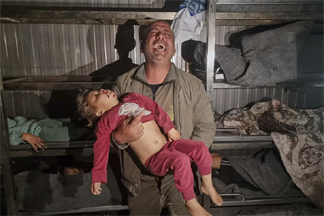

CAIRO (TIP): When the first explosions in Gaza this week started around 1:30 a.m., a visiting British doctor went to the balcony of a hospital in Khan Younis and watched the streaks of missiles light up the night before pounding the city. A Palestinian surgeon next to him gasped, “Oh no. Oh no.” After two months of ceasefire, the horror of Israeli bombardment was back. The veteran surgeon told the visiting doctor, Sakib Rokafiya, they’d better head to the emergency ward.
Torn bodies soon streamed in, carried by ambulances, donkey carts or in the arms of terrified relatives. What stunned doctors was the number of children.
“Just child after child, young patient after young patient,” Rokafiya said. “The vast, vast majority were women, children, the elderly.”
This was the start of a chaotic 24 hours at Nasser Hospital, the largest hospital in southern Gaza. Israel shattered the ceasefire in place since mid-January with a surprise barrage that began early Tuesday and was meant to pressure Hamas into releasing more hostages and accepting changes in the truce’s terms. It turned into one of the deadliest days in the 17-month war.
The aerial attacks killed 409 people across Gaza, including 173 children and 88 women, and hundreds more were wounded, according to the territory’s Health Ministry, whose count does not differentiate between militants and civilians.
More than 300 casualties flooded into Nasser Hospital. Like other medical facilities around Gaza, it had been damaged by Israeli raids and strikes throughout the war, leaving it without key equipment. It was also running short on antibiotics and other essentials. On March 2, when the first, six-week phase of the ceasefire technically expired, Israel blocked entry of medicine, food and other supplies to Gaza.
Nasser Hospital’s emergency ward filled with wounded, in a scene described to The Associated Press by Rokafiya and Tanya Haj-Hassan, an American pediatrician — both volunteers with the charity Medical Aid for Palestinians. Wounded came from a tent camp sheltering displaced that missiles set ablaze and from homes struck in Khan Younis and Rafah, further south. (AP)


Be the first to comment